Monday, March 8, 2010

Chapter 15 Reading Journal

What is the difference between sex linked genes and genomic imprinting?
Sex linked genes are genes that are on the X or Y chromosomes so that when a bad version or mutated version of the gene on the X chromosome in a male there is not another x chromosome to compensate or mask the effect which is why sex linked traits often cause disorders more frequently in males. Genomic imprinting is when the expression of a certain gene is different depending on which gender of parent it was passed along from.

What is a Barr body?
In a female organism in each cell one of the X chromosomes is turned off, this repressed X is called the Barr body. This results in mutli-colored fur and such in many animals when that trait is sex-linked because then a certain color is expressed in certain cells while not in others because which X become the Barr body is randomized and not the same in every cell.

What are linked genes?
These are genes that are on the same chromosomes so they tend to defy the rule of independent inheritance and actually be inherited together during meiosis. When crossing over occurs some linked genes get separated, the farther apart the genes are on the chromosome the more likely they are to be recombined through crossing over.

Facts:
- Chromosome theory of inheritance stated that genes have a specific location on the chromosome (loci) and that chromosomes undergo independent assortment
- Some sex linked disorders include: Muscular dystrophy, hemophilia, and color blindness
- Genetic recombination is when offspring have combination of traits different from either parent
- A linkage map is a map of genes based on the recombination frequencies
- Non-disjunction causes organisms to have more than the normal number of chromosomes


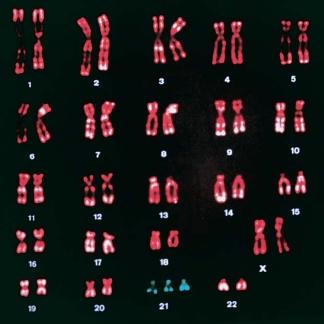
This is a karyotype of a person with Down syndrome. This shows how trisomy in chromosome 21 is the difference that causes this particular disorder. The effects of this disease is: unique facial features, shorter, heart problems, more likely to get respiratory infections, and in severe causes mental retardation.

Summary:
Morgan established the theory of sex-linked genes some genes that were more likely to be expressed based on the sex of the organism. Some genes are located on the X and Y-chromosomes so they display a different type of inheritance patterns because in males they only have one copy of the genes located on the X chromosome. During crossing over genes recombine and give rise to offspring with different varieties of traits. The farther apart a gene is on the chromosome the more likely recombination will occur so the recombination frequencies are used to determine the distances between genes on a chromosome. Inaccurate divisions during meiosis give rise to organisms with abnormal number of chromosomes, which can in some cases have no effect while in other case be detrimental to the organism.

Chapter 16 Reading Journal

What main scientists aided the development of the DNA theory?
Hershey and Chase used and experiment in which they traced viruses’ infection of the host cell and using radioactive markers determined that nucleotides not proteins were the genetic materials. Watson and Crick can up with the model of the structure and pairing of the DNA in large part due to the discoveries and use of X-ray crystallography by Franklin and Wilkins who saw that the DNA formed a double helix. The Watson and Crick model stated that DNA was a double helix, that A paired with T and C paired with G because they were purines and prymadines and two of the same kind couldn’t pair together without making the structure too large. Also DNA arranged itself in an anti-parallel manner.

What is the difference between DNA replication of the leading strand and the lagging strand?
The leading strand is copied in the 5’ to 3’ direction towards the replication bubble in one long strand with no interruption. The lagging strand is moving in the wrong direction technically so it has to replicate in smaller segments called okazaki fragments in 5’ to 3’ direction and each segment has to be primed and then reconnected by DNA ligase. Even though it would seem the lagging strand would be slower in actuality both strands replicate at an even pace.

How does DNA replication guard against error?
The fact that each base will only pair with one other base makes the room for error smaller. DNA has functions such as mismatch repair, which will replace a incorrectly placed base with the right base. Nucleotide excision repair is when chunks of incorrectly coded DNA are removed and the correct sequence is spliced back in. Also telomeres are long strands of noncoding DNA placed at the end of every strand of DNA so that each time the strand shortens it doesn’t cut out DNA that actually codes for anything.

Facts:
- When DNA replicates the new strand has one daughter strand and one strand from the original so that both of the new strands are half of the original
- Cytosine and thymine are pyrimidines and Adenosine and Guanine are purines
- The helix of DNA makes a turn about every 3.4 nm
- Helicase unwinds the DNA before and after the replication fork so that it doesn’t wind to tightly and tear
- DNA polymerase 3 synthesizes the new strands of DNA


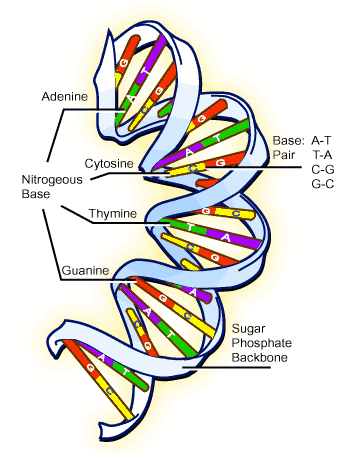
This shows the base pairing that occurs along with the double helix and anti-parallel structure that a DNA molecule has. Also showing how the bases are attached to the sugar phosphate backbone, which allows them to stay stable.

Summary: Understanding that DNA is the genetic material is relatively recent within the study of biology but much is now known about DNA. DNA replicates by attaching the 5’ end of a strand with DNA polymerase 3 after primer helps it bind it then creates a complimentary strand that has a sequence opposite the replicated one. The DNA of non-eukaryotes is simpler and doesn’t take as much time to replicate because it is circular eukaryotes are more complicated because some genes are more tightly packed as to not be replicated ect.

Chapter 17 Reading Journal

What are the three steps of transcription?
First it starts with a transcription unit this is the whole strand of DNA that is transcribed into RNA. 1. Initiation is when the RNA polymerase binds to the promoter. In eukaryotes it must first receive help from transcription factors so that the polymerase can bind. 2. Elongation: is when the polymerase moves along the strand of DNA producing a strand of RNA with the complementary sequence. 3. Termination: the terminator sequence of DNA causes the RNA to be released and then it detaches ready for modification before translation.

What is the difference between a codon and anti-codon and what do they do?
A codon is a sequence of three bases on an mRNA molecule that will be translated into a protein. The anti-codon is the complementary strand on the tRNA that allow the codon to bind. Codons come into the tRNA at the A site where amino acids are added and then the amino acids from the codon in the P site to the codon in the A site. Then the Codon in the A site shifts to the P site while that codon moves to the E site and exits so that the whole process may start again.

What are the different types of mutations?
Point mutations change only one base in a sequence and they account for either missense or nonsense mutations. Missense is when the codon still makes a protein though that protein may be dysfunctional. Nonsense is when a normal codon is turned into a stop codon so that no protein is made. Insertions and deletions are the adding and removal of certain sequences, if these come in threes they are often not very harmful but if not they can cause a frame shift and through off all the codons down the line.

Facts:
-Mutagens are substances that cause mutations in DNA sequences
-In modification mRNA gets a 5’ cap and poly-A-tail
-RNA splicing takes out the introns which are the portions of the RNA that don’t code for anything so they are removed
-Many codons code for the same proteins even when they have a different last base this is called the wobble effect
-The template strand is the strand of DNA that the polymerase binds to in order to make the RNA strand


This is the codon table, used to determine what amino acid a certain codon makes and then from there what amino acid sequences and therefore proteins a certain strand of DNA or RNA will produce once translated.

Summary:
DNA codes for RNA which then translates into proteins this is how something goes from being a gene to being expressed, if the protein of a certain gene isn’t made then that gene isn’t being expressed. First DNA is transcribed into a complementary RNA sequence after the RNA is processed and modified it is translated into a protein although some RNA is never translated but still useful in its transcribed form. RNA polymerase allows the synthesis of RNA after it attaches to the promoter. Translation uses a ribosome small and large subunit and tRNA that allows the codons to attach to the anti-codon. Mutations with the DNA cause problems in the organism because they effect protein production by either stopping it or changing it into different proteins that aren’t as useful to the cell. RNA doesn’t have to be modified in bacteria like it does in eukaryotes because it doesn’t have to be packaged to pass the nuclear envelope.

Chapter 18 Reading Journal

What are oncogenes and proto-oncogenes?
Proto genes are the ones that code for normal cell growth and once a mutation occurs in these type of genes they turn into oncogenes where they produce more proteins than normal and become cancerous. Though cancer can also be a result of a decreased function of genes that inhibit cell division.

What’s the difference between a repressible and inducible operon?
Repressible operons are typically turned on typically building some type of molecule but when enough of that molecule is produced it binds to the repressor activating which then binds to the activation site and block the production of that molecule until the concentration goes down again. Example would be the lac operon. Inducible operons are typically off but the production of a certain other molecule (inducer) will bind to the repressor deactivating allowing the activation site to be open and the production of whatever this gene makes which would typically be something used to break down a molecule. An example of this would be the tryp operon.

What is DNA methylation and histone acetylation and what is the function for the cell?
DNA methylation makes a chromosome more tightly packed because it makes the DNA more attracted to itself therefore limiting gene expression. Histone acetylation is when amino groups are added to histone proteins decreasing the attraction and making them unwind more. Genes in an area like this are more likely to be expressed. The mechanisms of cell specializing utilize these two types of increased or decreased expression.

Facts:
- Cell differentiation is how cells go from being blank in the zygote to being specialized to take on specific functions in the organism
- Morphogenesis is how cells organize into things like tissues and organs
- Apoptosis is the programmed suicide of a cell that occurs once DNA is too damaged
- The P53 gene is an important tumor-suppressor meaning that it prevents cancer by regulating the cell cycle
- The operon has the operator, promoter, and the genes of the operator all within it


This shows how through alternate splicing the same gene can give rise to several different codons and therefore proteins. In this way gene expression can help to preserve space within the genome by using one gene for several uses by just expressing it different ways.

Summary:
Operons are used so that cells don’t use their energy making molecules they don’t need at that exact moment. These can be either up repressible inducible operons and they are like off and on switches for a particular gene. Gene expression is regulated from the time a cell is in the zygote well into its developed life through methods such as alternate splicing, mRna degradation, chromatin modification, and protein processing. The use of many non-coding RNA molecules is to help with gene expression. Cells differentiate so that only certain genes this is the reason that liver cells and skin cells are not the same they different regulations of gene expression aid with this.

Chapter 19 Reading Journal

What is the difference between the lysogenic and lytic life cycle?
In the lytic life cycle the virus attaches to the cell inserts its genome replicates many times until there are so many new viruses that they bust out of the cell killing it in the process this is quick and effective because there are many new viruses in a short amount of time but slightly inefficient since it also kills the host. In the lysogenic life cycle the virus enters its genome into the host’s genome so that the cell continues functioning as normal except that it is also producing new viruses that are released without killing the cell this relationship can be relatively symbiotic for a while.

What is a retrovirus?
This is a virus that uses RNA as it’s genome and uses reverse transcriptase to convert the RNA into DNA and then implement it into the genome of the animal cell its infecting. HIV is this type of virus and due to the complex nature of using reverse transcriptase and its ability to change its markers on the outside of the cell so often allows it to go undetected for long periods of time.

What are prions and viroids?
Viroids are circular RNA molecules fairly short that infect plants most often they are able to reproduce within host cells. Even though they don’t code for proteins they seems to effect regulatory genes and mess up their function. Prions are misfolded proteins that cause the other proteins they encounter to misfold as well. They often cause brain disorders.

Facts:
-A viruses host range limits the type of cells they can infect and typically the host range in very small
- Viruses aren’t considered alive because they cannot reproduce without a host
-The capsid is the protien shell that encases the genetic material of a virus
-Viruses that infect bacterial are called bacteriophages or just phages
- As humans we come in contact with viruses on a daily basis and if it weren’t for our cells ability to recognize them as foreign we would all be in grave danger


This is a diagram of the basic structure of the virus with the genetic material enclosed in the capsid the tails are used to attach to cells and the sheath to be injected so that the genetic material will be put into the host cell.

Summary:
Viruses use enzymes and ribosomes along with a genome to utilize a host cell in order to reproduce. They either use the lysogenic or lytic life cycle to reproduce. Viruses either use RNA or DNA as their genetic material if they use RNA they have to use reverse transcriptase to turn it into DNA first. Viruses can infect all sorts of animals as well as plants. Outbreaks of newly evolved viruses that humans don’t have immunities to yet can be very dangerous.

Chapter 20 Reading Journal

What is PCR?
This is a way to copy small portions of DNA in a test-tube. It is used when the DNA sample is impure, because when this is the case this method copies strands more quickly than cloning could.

What is the process of PCR?

First the DNA is heated so that the strands separate. Then the DNA is cooled so that primers designed to adhere to certain portions of the strand attach to their complementary strand. Once the temperature is raised only slightly this time polymerase binds and new DNA is synthesized this marks the end of cycle one. Cycle two starts by heating and denaturing the newly formed DNA strands. Primers bind to all four strands once the temp has cooled and then new strands are formed again. This same cycle continues forming more DNA molecules and the more cycles the higher percentage of the molecules are of the desired portion of DNA.

What are GMOs and how do they relate to our everyday lives?
This is a genetically modified organism this can either be through artificial selection or even using genes from another species. These organisms whether animals or plants are often used for food. Most of the agriculture in the US is made of GMOs but it is not required that they are labeled as such. In other countries especially European ones these foods have been banned because many are concerned that since they are not natural they also aren’t healthy to consume. Some are also concerned that these organisms will take a toll on the environment and crossbreed with the natural versions of similar organisms.

Facts:
-Scientists are using stem cells to research regulatory genes and various diseases since stem cells are sort of a blank slate cell.
- Totipotent cells are mature cells that can go back to an un-differentiated state and then become different specialized cells
- Scientists are now able to clone entire organisms as well as single cells
- Gel electrophoresis measures the size and charges of different dna sequences because they arrange themselves differently within the gel based on these factors
- A genomic library is the complete set of plasmid containing cell clones each containing segments from the original genome.


This is the process of magnifying a small bit of DNA as describes in questions one and two. The process of denaturing and recombining to duplicate a selected portion of the strand over and over until it is more accurate.

Summary: DNA cloning and other DNA technologies are used to study genomes and develop new products and possibly studying diseases. Eukaryotic DNA can be cloned within a bacterial plasmid by splicing it and then inserting the strand of DNA wanted then the cell clones itself making more copies of the strand. DNA is analyzed through methods such as gel electrophoresis, DNA sequencing, and analyzing gene expression and function. Cloning and other DNA technologies have uses in the medical field, in crime scene investigation, environmental cleanup and even creating new organisms for food sources.

Chapter 21 Reading Journal

How do the genome sizes vary between species?
Some animals have relatively large genomes with few genes. For instance flies have a genome twice the size of a nematodes, yet the nematode has over 6,000 more genes than a fly. Humans have a genome 10 times the size of both these animals but they have about the same number of genes as the nematode. The reason this can still provide the human with a large enough variety of proteins is that many of these genes are able to be spliced into different proteins through the use of alternate splicing of exons.

What are the three stages of genome sequencing?
1. Linkage map: markers are found all along the chromosomes recombination frequencies are used to determine the distances between them. These markers can be either genes, STRs or RFLPs.
2. Physical map: a physical distance between markers is determined. Then fragments of DNA are replicated so they can be overlapped to determine the order of them within the chromosome.
3. DNA sequencing: The ultimate goal is to know the nucleotide sequence of each chromosome. Now there are machines and computer programs that are able to help with this process

What is the effect of hox gene expression during development in crustaceans and insects?
Over time through the evolution of four different expressions of hox genes the different body shapes of these organisms has developed. This can be seen in the difference of body shape of the shrimp and grasshopper. The hox genes expression is responsible for morphological differences of species.

Facts:
- evo-devo is the study of evolutionary development biology
- Multigene families are collections of two or more identical or very similar genes
- In the human genome only 1.5% of it actually codes for rRNA and tRNA
- Genomics is the study of a whole set of genes within a species
- Bioinformatics is the application of computational methods to storage and analysis of biological data


This is a mapping of protein interactions. This is the statistically likely interaction between all the proteins found in an organism as predicted and mapped by a computer program.

Summary:
Scientists have begun to map genomes in order to determine things about animals their relationship to each other and the evolution of them. Databases and Internet tools help to pick out the sequences within a genome that actually code for a protein or the likely hood that one will. Some genomes are larger than others with smaller amounts of coding DNA this is a result of alternate splicing, transposable DNA, and repeating sequences. Alternation within structure of chromosomes, duplications, rearrangement of genes ect give the variety of genes that allows for evolution and study of these changes help the trace of evolution. The difference between expressions of genes such Hox genes change the developmental stages of organisms and change their body shapes.

Chapter 22 Reading Journal

What where the main theories about life on earth before Darwin?
Greek philosophers believed that all organisms were perfectly suited to their environment and they were organized by a scale of complexity called “scala naturae”. Then many people believed in creation that all organisms were made by god for a certain purpose. George Curvier believed that all changes in living organisms happened because large natural disaster killed off certain species but no new species were being created “Catastrophism”. James Hutton believed that everything changed gradually and the same mechanisms of change were still operating “gradualism”. Charles Lyell proposed uniformitarianism was influence by Hutton said that there was a constant level of change in the geological features of the earth. This meant the earth had to be very old and influenced Darwin in his idea of evolution being changes with species over time. Lamarck believed in a sort of evolution but he believed that the characteristics organisms obtained during their life could be passed along and the features not used would get weaker with the generations.

What is Darwin’s general theory?
Natural selection/ descent with modification
He believed that most organisms would reproduce until they overused their environmental resources and therefore those best suited to their environment would have a better chance of surviving to pass along their inherited traits to offspring. Because of this certain traits would become more prominent while others would leave a population. A population was the smallest unit of evolution and this also meant that all creatures were related to each other by a common ancestor.

What are Homologous structures, analogous structures and vestigial organs?
Homologous structures are structures that are the same in different species but they have different functions this shows a common relationship between all life. Vestigial structures have little to no use in a species but they are left over from their ancestors so they are still present. Analogous structures shows no relationship between organisms but are rather similar structures that arose from different species evolving to similar environments separate from each other.

Facts:
- Covergent evolution- is when organisms evolve separately to similar environments
- Biogeography- the geographic distribution of species this gives a lot of evidence for evolution
- Endemic species are those found only in a specific location and nowhere else in the world (typical to islands)
- Artificial selection- when humans breed animals for desired characteristics
- Darwin believed in decent with modification and because everything came from a common ancestor it could be organized into a tree of life


This shows how the same bones are used for different functions amongst mammals the homologous structures also show that all mammals are related in some way all the way from the bat to the human.

Summary:
There were many different theories about life on earth and the changes of the earth itself. The theory of evolution had been proposed by Darwin came up with a mechanisms through which it would be plausible. He went on a voyage in the Beagle and studied the birds on the Galapagos Islands and their common relation to each other and came up with the theory of natural selection. Much evidence such as fossil record, direct observation (bacterial resistance to drugs), homology, and biogeography supports the theory of evolution.

Chapter 23 Reading Journal

What maintains genetic variation amongst organisms?
Variation is maintained in some ways by having two alleles determine the singular phenotypic expression. Geographical separation between populations produces more variation by evolving to different environment. Mutations give population’s new alleles to work with and sexual recombination and fertilization is also accountable for genetic variation.

What is the Hardy- Weinberg equation/ assumptions and how is it used?
P+Q=1 P^2+ 2pq + q^2=1 P= % of dominant allele q= % of recessive alleles P^2= homo-dominant 2pq=heterozygous q^2= homo-recessive. Assumes that these ratios will remain the same so long as the population meets the following criteria: 1. Large population (no genetic drift) 2, Isolation (no gene flow) 3. No net mutations 4. Random mating (no sexual selection) 5. No natural selection. This is used to measure the rate at which a population is evolving because if it defies these criteria the ratios will be changing and therefore we can deduce that it is evolving.

What are the different mechanisms for evolution?
Natural selection- where certain characteristics that benefit an organisms in relation to their environment increase in frequency because of their higher survival rate.
Genetic Drift- Allele frequencies change at random based on a smaller population either most of it dying out or a small group being separated from the rest
Gene Flow- The movement of certain alleles in or out of a population because certain organisms with their gamete move in or out. In plants this can happen merely from the wind blowing
Facts:
- Genetic drift can occur in one of two ways bottleneck effect (natural disaster kills off most the population or founders effect (small group within the population gets separated from the whole)
- Natural selection is the only evolutionary mechanism that makes an organism more suited to their environment
- Balancing selection is when two variations of genotype are maintained through selection
- Neutral variation occurs when mutations cause neither a positive or negative effect
- Sexual selection often encourages phenotypes that have nothing to do with the organisms ability to survive in their environment.


Directional selection is when the environment favors the extreme of a characteristic so the trend moves towards the extreme. Disruptive is when the environment favors both extremes so the trend moves away from the average in both directions. Stabilizing selection is when the average makes for more successful organisms so the trend moves towards the average and away from both extremes.
Summary: Genetic variation is rampant there is variation within a population, between populations, between the organisms in different geographical locations ect. Mutations introduce new alleles into a population but the most genetic variation within a population comes from crossing over, independent assortment, and fertilization. Populations of species have a gene pool, which is the combination of all their alleles when the frequencies of these alleles are changing evolution is occurring. The hardy-Weinberg principle assumes that allele frequency is remaining the same and is used to compare to the actual and measure evolution rates. Allele frequencies are changed by: natural selection, genetic drift, and gene flow. Natural selection is the only change in a allele frequency that is guaranteed to improve the population, however it will never make the perfect organism because it has to work with the variation already present it doesn’t create new characteristics.

Chapter 24 Reading Journal

What are the different definitions of species?
Biological- A group of organisms that can breed and produce viable and fertile offspring
Morphological- A group of organisms that has similar body shape and other structures
Ecological- A group of organisms that reacts in the same way to their environment, basically eats the same foods and resides in the same habitat
Phylogenetic- The smallest group of organisms that share a common ancestor (new branch on tree of life)

In the Biological species concept what barriers can separate different species?
The barriers that separate species in this concept are reproductive things that keep them from producing viable fertile offspring these are separated into two groups prezygotic (prevent a zygote from even being formed) and Postzygotic (keep the offspring from meeting the criteria of being viable and fertile.
Prezygotic:
Habitat isolation- organisms live in different habitats and therefore rarely come in contact with each other
Temporal isolation- Mating habits vary in time of day or time of year
Behavioral isolation- certain mating behaviors are specific to the group so they don’t attract members from the other group
Mechanical isolation- the organisms’ reproductive parts don’t fit together properly
Gamete isolation- fusing of the sperm and egg is unable to occur

Postzygotic-
Reduced hybrid viability- The new organism is less suited for the environment than either parent and will therefore be naturally selected against
Reduced hybrid fertility- The hybrid is sterile and therefore genes cannot flow between the two species keeping them isolated
Hybrid Breakdown- The first generation of the hybrid may be successful but when they breed with either parent species their offspring is not

What is the difference between allopatric and sympatric speciation?
Allopatric speciation occurs when a geographical barrier such as a canyon arises between to species. Over time the species evolve separately and once some type of reproductive isolation arises so that even if they were put into they same environment again they couldn’t reproduce new species have been formed
Sympatric speciation is more rare but it occurs within a population. This can happen when gene flow is reduced between certain sects of a population due to habitat differentiation, sexually selective behaviors, or polyploidy. Polyploidy is most common within plants where often times once they have an off number of chromosomes they cannot reproduce with either parent species but they can fertilize themselves. Speciation within a population can also occur when certain genetic traits allows some of the organisms to utilize a different food group or environmental resource creating habitat isolation. When mates are chosen for certain traits (sexual selection) species can faction off as well.
Facts:
-A hybrid zone is a region where different species overlap and mate producing hybrid offspring
-If the offspring in the hybrid zone are in some way less “fit” than the parent species over time reproductive barriers with strengthen this is called reinforcement
-If the hybrids are successful the opposite can happen and reproductive barriers may be reduced possibly eventually even leader to reverse speciation
-There are two patterns for the course of speciation in the fossil record punctuated equilibrium (stays the same for a very long time and then rapidly changes) Gradualism (long periods of time show small but consistent change which eventually constituted new species.
-In some cases speciation can occur from a change in a single gene such as with Japanese snails.


This is an example of sympatric speciation these two species of flies are not separated geographically at all but they have form different species because they both utilize a different food source and have therefore created a habitat isolation between themselves.

Summary: For the purpose of this book and the study of evolution the biological species concept was used, which is that, species are different if they cannot produce viable fertile offspring. Speciation can occur either because of a geographical separation (allopathic) or with the same geographical area due to polyploidy, sexual selection, or habitat shift. Hybrid zones are sometimes formed where two different species habitats overlap the offspring being unsuccessful can create more reproductive barriers but successful hybrids can reduce them. Speciation can occur at different rates sometimes even within one generation as is the case with autoplyoidy. Study of genetics has shown that as little as one gene difference can separate a species.

Chapter 25 Reading Journal

How do Scientists think life arose on earth?

They believe based on experiments done my Stanley Miller and Harold Urey that the early oceans had tons of organic molecules floating around and the energy from lightning and UV rays converted these molecules into macromolecules such as amino acids and nucleotides. Then protobionts which have some life like characteristics may have formed they would be contained in a membrane and maintain a separate composition from their surroundings. Eventually amino acids were able to form ribosomes and RNA was used as the first genetic material. Ribosomes that were able to self-replicate would be naturally selected for and therefore the environment would give rise to a genetic code.

How is the Fossil Record used for information about living things?

The fossil record is mostly used to date organisms and the arrival of different species as well as by seeing them in chronological order enables scientists to guesstimate which species are descendents of other species. It also allows them to study at least the remnants of species that went extinct and see how creatures were adapted to the world as it used to be. They can date fossils either relatively by the position the strata that they are found but this only shows the age of fossils in relationship to other fossils. To get a more accurate age of fossils radiometric dating is used. Basically by using the half-life (time it takes for half the isotope to decay) of the isotope and then comparing it to the amount left in the fossil a more accurate age is given.

What is Adaptive Radiation and what causes it?

These are periods of sped up evolutionary change to fill new environmental needs. After each of the five major extinctions a mass adaptive radiation has occurred. The mammals underwent an adaptive radiation after the dinosaurs went extinct the mammals had to become more diverse to fill the ecological roles the dinosaurs had before. Adaptive radiation can also occur on a small scale usually when organisms settle in a generally desolate land they then undergo large structural changes and such to fill up to the uncharted land. Basically large changes of species occur when there are ecological niches not being utilized so larger behavioral or structural changes occur to take on these roles.

Facts:
- About 250 million years ago all the land masses on earth were connected they form Pangaea this new environment killed off many species but also gave rise to new ones it also accounts for fossils of the same species now found in lands separated by the ocean
- 2.7 billion years ago oxygen started to become present on the earth giving rise to species that utilized respiration
- The first eukaryotes came to be 2.1 billion years ago scientists believe this was due to endosymbiosis where smaller organisms were engulfed by larger ones and the symbiotic relationship is the reason for organelles
- The accumulation of O2 in the earth’s atmosphere about 2.2 billion years ago led to organisms that utilize respiration
- The arrival of creatures with totally different body structure than their ancestors is a result of change in DNA sequence and regulatory genes becoming inactive allow the display of different genes


This shows how human and chimp skulls are very similar during the fetal stage but chimps’ skulls continuing elongating where humans stop. This is an example of how changes in genes that control growth and development when altered can make large differences in the anatomy of a creature and therefore lead to macroevolution and new species.

Summary:
The early atmosphere of the earth was rich with organic molecules these gave rise to macromolecules such as amino acids and nucleotides. Once protobionts that maintained a different chemical composition than their surrounding arose Rna became a method for passing along genetic info it was later replaced by DNA because it had less error. The fossil record shows us animals of the past ect and they are dated by radiometric or relative dating. The first organisms were prokaryotes then eukaryotes became prominent with the addition of O2 organisms became more diverse and once organisms colonized land they underwent even more diversification. Large groups of organisms have come to be and gone extinct long before humans were even on the earth these major events were due to continental drift and large changes in environment or natural disasters that led to mass extinctions, to recover from this the organisms left have undergone adaptive radiations. Major changes in organisms physical structure is often due to changes in regulatory genes and developmental timing and patterns. Evolution has no desired result so the trends for evolving vary based on the environment as organisms try to make the best out of their ecological niche.

Thursday, December 10, 2009

Chapter Thirteen Reading Journal

What accounts for genetic variation?
The fact that the chromosomal number is split during meiosis means that there are several possibilities of contribution from each parent that will come together. This refers to independent assortment of the chromosomes during meiosis 1 and random fertilization. The pairs of chromosomes are arranged independently and randomly along the metaphase plate for when they split during meiosis 1 this result in many combinations then they fertilize and combine with other gametes leaving endless possibilities for genes.

What are the distinct features of Meiosis?
Homolog pair during Meiosis 1 in mitosis sister chromatids are attached and they split. The kinetochore behavior is also unique because in meiosis both kineticores of the homolog pair attach to the same pole of the microtubles. In Mitosis the sister chromatids are attached to by cohesion, in meiosis the pairs are linked by the chaisma and then use the cohesion to keep the sister chromatids together until they spilt during meiosis 2.

What are the benefits and disadvantages of sexual reproduction?
The advantage is that there is more room for variation and therefore adaptation. With sexual reproduction organisms are not the same as their parents, which creates variety. In asexual reproduction parents make exact replicas of themselves, they do not need a second person to contribute this is an advantage, because it makes asexual reproduction easier to occur since they do not have to find a mate. This means though that if something in the environment changes an entire species of asexual reproducing organisms could die off, where sexually reproducing organisms would have certain people with enough variation for some to survive most likely. A disadvantage to sexual reproduction is also though that it is so variant because if a species is successful with certain characteristics their offspring may not have those same beneficial traits.

Five Facts:
-A locus is a gene’s specific location on a chromosome
-Karyotyping involves mapping chromosomes
-Haploid cells are gametes and they contain half the chromosomes of diploid also known as somatic cells they make up the majority of the organism
-All sexual reproduction involves meiosis
- Meiosis halves the chromosome number so that offspring do not have double the genes of their parents.


This diagram shows the steps of meiosis. Essentially chromosomes replicate like they would in mitosis but instead of separating once they pair off into homologs cross over with other pairs and then separate. Then the sister chromatids which are still attached but may have some pieces from another chromosome separate halving the chromosome number.

Summary: In sexual reproduction offspring inherit half their chromosomes from each parent this creates variation and quicker adaptations. In asexual reproduction one parent exactly duplicates themselves. In somatic cells there are 2n chromosomes in gametes there are n chromosomes. Gametes are produced by meiosis and they combine with gametes from the opposite sex of the same organism to form a zygote, which is diploid and continues to replicate. Because of the genetic variation caused by crossing over and independent assortment with meiosis evolution is far more efficient.

Wednesday, November 25, 2009

Chapter Twelve Reading Journal

Questions:

What is the difference between mitosis and the cell cycle?
Mitosis includes prophase, prometaphase, metaphase, anaphase, and telophase this only makes up about 10% of the cell cycle the rest of the cell cycle is interphase that consists of G1, G2, and S phases. Mitosis is when the cell is actually in the process of dividing the other part of the cycle involves growth and DNA synthesis, which is most of the cells life. Although often the cells are in Go phase when they are told not to divide by the G1 checkpoint.

How do cells control the cell cycle?
Different cells divide at different rates and certain cells once in maturity never divide examples of these cells are muscle and nerve cells. The cell cycle has checkpoint after each of the sub phases of interphase and after mitosis. The checkpoint after G1 is called the restriction point and if it doesn’t receive the go ahead at this checkpoint it is sent into the non-dividing state called Go. Besides the checkpoints there are other molecules that regulate cell division mainly protein kinases and cyclin. Cyclin is constantly present but usually in the inactive form its active form is in higher concentration during S and G2 phases but is much lower during mitosis. Cells also regulate their cell cycles by knowledge of external factors such as surrounding density and anchorage.

What is known about how cancer cells differ from healthy cells?
Cancer cells don’t have good regulation of their cell cycles so they divide far too often. The fact that they are not anchorage dependant means that they can move from different parts of the organism and start growing in other places. The fact that they lack density dependency is the reason tumors form because the cells just layer on top of each other without stopping. They most also lack the cellular control of aptopsis or else they would self destruct because of their dysfunction.

Facts:
- Somatic cells contain 46 chromosomes gametes (reproductive cells) have 23 chromosomes
- Chromosomes are copied to from 2 sister chromatids which are attached at the centromere
- The five main phases of mitosis are prophase prometaphase metaphase anaphase and telophase the DNA needed for this division is produced during the S phase of interphase
- Microtubules play a major role in cell division because they attach to kinetochores and then shorten to separate the chromosomes that aligned in the middle during metaphase
- A benign tumor are cancer cells that stay in the place they started growing malignant tumors inhibit the function of major organs


This figure breaks down the various steps of mitosis. Doesn’t need much explaining I’m putting it on here because it explains.

Summary:
Cells are made up of genetic information that is packaged into chromosomes that are duplicated and then separated during cell division. The chromosomes duplicate to chromatids that are held together by the centromere. During interphase the cell grows and replicates DNA. It reaches several checkpoints before continuing and responds to many outside regulators. Cancer is somehow deficient in its regulation so its cell cycle malfunctions.

Chapter Eleven Reading Journal

Questions:

What are the three basic steps of Cell signaling?
Reception comes first when a chemical signal is detected by the cell this may happen because of direct contact or because the cell is receiving a signal that has already been passed along and is finally reaching the target cell. Transduction occurs when the message is converted so that it can be passed along to other signal molecules this is either done through the use of g-proteins, tyrosine kinasases, or ion channels. Response is when the cell behaves the way that the signal intended to make the cell.

How do G-Protein receptors work?
These receptor are in the membrane of cells and G proteins are either in the in active state of GDP or the active state of GTP when a phosphate has been added. When the g-protein receptor receives the signal molecule it changes the g-protein to the active form the g-protein then travels to an enzyme that it activates and often changes the shape of the enzyme once banded to it. This either immediately bringing about the cellular response or continuing to transfer the response through other enzymes. This is one of the most widespread cellular signaling functions.

What are Second Messengers?
Typically small water-soluble molecules or ions that are used to spread the signal within the cell. cAMP usually activates protein kinase A which typically spreads the signal by adding phosphorous to other proteins. This happens because the first signal that occurs in the membrane increases the levels of Camp to pass the signal along within the cell. Other cellular signals increase levels of ions most typically Ca + IP3 or DAG these work similarly to Camp in that the original signal triggers an increase in the ions which triggers further responses. Second messenger is a general term used for non-proteins used in the transductions pathways.

Facts:
- Cells have to communicate because they need to regulate cellular processes and respond to their environment as well as reproduce
- Cells perform apoptosis basically cell suicide when their DNA is coded improperly or they are about to stop functioning they do this to prevent damage to other cells
- Cell signaling can also stimulate certain genes within the nucleus to produce certain RNA
- Earl Sutherland discovered second messengers and the use of cAMp in epinephrine
- Ligands bind to receptors to promote the cellular response


This shows how signals can be transferred over a long distance. The original receptor activates a molecule that is able to activate other protein kinases. This works because a phosphate is added to the protein activating it then deactivates be transferring its P to another kinase, which is activated. Thus the reaction can move from molecule to molecule.

Summary:
Cell signals are either local or long distance. The main signal receptors are G-protein tyrosine kinnases and ion gated channels. To get from reception and response cells must undergo transduction pathways that either use phosphorylation cascade or secondary messengers. The response helps regulate transcription and other cellular functions this also helps them identify surrounding cells. The also use signaling to know when to self-destruct to prevent damage to nearby cells.

Chapter Ten Reading Journal

Questions-

How does Photosynthesis relate to respiration?
The general equation of Photosynthesis is the reverse of respiration. Photosynthesis uses energy to build molecules of carbs for energy storage. Plants also use respiration when they need ATP for their cells but they are able to use sunlight to formulate the glucose needed unlike heterotrophs that have to consume this by eating other organisms often plants. Both respiration and photosynthesis have many similarities the product of the steps of photosynthesis are reactants of respiration. Photosynthesis only has two major steps instead of the three in respiration, and it also contains a cycle and an electron transport chain some ATP is also produced during this process.

Explain the concept of wavelengths visible light and how they relate to photosynthesis?
Light behaves like a wave and a particle; the particle is called a photon. The distance between peaks of a wave of light is called the wavelength the shorter the wavelength the higher the energy of light and the greater energy photons of that light contain. The visible light spectrum is from wavelengths of 380 to 750nm. The Chloroplasts contain chlorophyll molecules that absorb light. The most effective visible light is violet-blue and red and the least effective is green since chlorophyll reflects that color. Accessory pigments such as carotenoids and xanthophylls help the plant absorb more colors of light making the process more efficient. The membrane of the thylakoid contains light harvesting complexes that use these pigments to excite electron and send them to the primary electron acceptor sending the energy from Photosystem 2 to Photosystem 1.

What are the evolutionary advantages of CAM and C4 Plants?
Most plants can be called C3 plants because they use a 3-carbon compound to start the Calvin cycle. Unfortunately when not very much Co2 is present the Calvin cycle will bind to O2 to produce more Co2 this can be seen as very wasteful because it consumes ATP. C4 plants have adapted to hot dry climates because they use PEP carboxylase to which has a very high affinity for CO2 to fix CO2 in the mesophyll cells before sending CO2 to the more contained bundle-sheath cells where the Calvin cycle takes place. This eliminates photorespiration and also lessens water evaporation. CAM plants leave their stomata open only during the night to avoid the excessive amounts of water evaporation that would occur during the day. They fix co2 with and acid known as CAM during the night and then use it during the day when the light reactions are occurring.

Facts:
-The O2 released during photosynthesis is a result of the water spitting during the light reactions
-NADPH and ATP are formed during the light reactions and these energy molecules are needed to fix co2 during the Calvin cycle
-Stomata are the pores in the leaf stroma is the liquid inside the chloroplast
- Photosystem 2 occurs first and best absorbs light with a wavelength of 680 Photosystem 1 occurs second but can also function independently and best absorbs light with a wavelength of 700.
- ATP synthase is used during the electron transport chain from photosystem 2 to photosystem 1 when a H+ concentration is formed within the tylakoid pumping ATP into the stroma where the Calvin cycle occurs.


This depicts the relationship between Photosystem 1 and Photosystem 2. Photosystem 2 absorbs light and splits water to send the excited electron to the electron transport chain that produces ATP while sending the electron to Photosystem 1. Photosystem 1 uses this energy to from NADPH, but it can also independently absorb light and form NADPH. This is why Photosystem 2 is said to use non-cyclic electron flow and Photosystem 1 uses cyclic electron flow.

Summary:
Plants are said to be the producers because they don’t need to live off other organisms they use photosynthesis to produce glucose. Inside the chloroplasts within the membrane of the thylakoid light energy is absorbed by the photosystems that produce NADPH and ATP the energy storing molecules needed for the Calvin cycle. The Calvin cycle uses CO2 to combine with Rubisco ATP and NADPH power the cycle and are recycled to NADP+ and ADP to be reused in the light reactions. The Calvin cycle produces G3P, which is converted into energy storing molecules.

Chapter Nine Reading Journal

Questions:
What is the basic summary of respiration?

The first step is glycolysis, which breaks down glucose and produces NADH, ATP and Pyruvate. In the energy investment phase the cell uses ATP to break glucose in G3P. In the energy pay off phase NADH and are produced along with Pyruvate, which makes it possible to move into the Krebs cycle. Through active transport the Pyruvate is moved into the mitochondria, once Coenzyme A is added CO2 and NADH are released forming Acetyl CoA. Acetyl CoA combines with oxaloacetate to start the Krebs cycle forming NADH and FADH2. These molecules are used as the electron transport chain, which creates a concentration gradient powering ATP synthase, which produces ATP.

What are the different types of fermentation?

Alcohol fermentation: Ethanol is converted to Pyruvate first CO2 is released forming acetaldehyde then its reduced by NADH to ethanol this recycles the NAD+ so the glycolysis can continue. Many bacteria and yeast use this for energy production.

Lactic Fermentation: Pyruvate is reduced to NADH forming Lactate. This is also used in bacteria and fungi, but also used in animal cells when they are short of oxygen. In humans lactate is taken to the liver and converted back to Pyruvate.

How does ATP synthase work?
NADH and FADH2 release their H+ ions to proteins in the membrane that pump the H ions across the membrane to create a concentration gradient. The H ions move back across the membrane to reach equilibrium through the protein ATP synthase that by the energy provided attaches P to ADP forming ATP. This is called oxidative phosphorylation. About 36 ATP are made through this process for every NADH 3 ATP can be produced and for every FADH2 2 ATP can be produced.

Facts:
*Glycolysis is one of the most wide spread metabolic pathways and is therefore the oldest.
*Cells are able to trigger the production of more ATP or make the process slow because of feedback inhibition.
* O2 acts as the final acceptor in the electron transport chain
* The general equation for glycolysis is C6H12O6 + 6O2 → 6CO2+ H20 + energy hydrogen is oxidized and the Oxygen is Reduced
* The majority of ATP is produced during ATP synthase/ electron transport chain, but it is made other times during respiration


This shows the Krebs cycle also known as the citric acid cycle. Acetyl CoA combines with the oxaloacetate to form citrate. As the cycle continues NADH and FADH2 are released as NAD+ and FADH are reduced. This is also the step in respiration where Co2 is released and it is considered a cycle because the same products will be produced every time allowing it to occur again in other words oxaloacetate will be produced allowing acetyl CoA to combine with it theoretically allowing it to continue forever.


Summary:
All cells need energy and they undergo a process called respiration to produce this energy. Respiration involves glycolysis, which can also be used for anaerobic respiration (respiration without O2) if O2 is present glycolysis moves to the Krebs cycle and then to the electron transport chain performing oxidative phosphorylation thus completing aerobic respiration. Fermentation is used in organism that produce energy either without the presence of a mitochondria or when O2 levels are depleted. Since glucose is not always available cells must perform respiration using other molecules such as fats and proteins by breaking them into either G3P, Acetyl CoA or as the case is only in proteins moving directly into the citric acid cycle.

Tuesday, October 13, 2009

Chapter Related Vids

Chapter One: (possible distant relative of the human?)

http://www.youtube.com/watch?v=eIW4lqLz_Rc

Chapter two: (difference between ionic and covalent bonds)
http://www.youtube.com/watch?v=ERy18NwemVc

Chapter three: (Properties of water resulting in H-bonds)

http://www.youtube.com/watch?v=Jh2qpsZe6GA

Chapter Four: (Enantiomers)
http://www.youtube.com/watch?v=G-eMr1kxorc&feature=related

Chapter Five: (protein structure)
http://www.youtube.com/watch?v=lijQ3a8yUYQ

Chapter Six: (cell tour)
http://www.youtube.com/watch?v=--NXZCX9VPA&feature=related

Chapter Seven (Cell membrane)
http://www.youtube.com/watch?v=GW0lqf4Fqpg&feature=related

Chapter Eight: (ATP Cycle)
http://www.youtube.com/watch?v=Ki9Tly-A-Rc&feature=related

Chapter Nine: (Cellular Respiration)
http://www.youtube.com/watch?v=x-stLxqPt6E&feature=PlayList&p=E705480FEF95FE96&playnext=1&playnext_from=PL&index=41

Chapter Ten: (Summary in song) http://www.youtube.com/watch?v=Q_1mxZdF2TY&feature=channel
http://www.youtube.com/watch?v=OYSD1jOD1dQ&feature=channel

Chapter eleven (G-proteins)
http://www.youtube.com/watch?v=NB7YfAvez3o

Chapter Twelve: (Cell cycle check points)
http://www.youtube.com/watch?v=QGx50C1w8YY

Chapter Thirteen: (Meiosis)
http://www.youtube.com/watch?v=uh7c8YbYGqo

Chapter 15: http://www.youtube.com/watch?v=H1HaR47Dqfw

Chapter 16: http://www.youtube.com/watch?v=teV62zrm2P0

Chapter 17: http://www.youtube.com/watch?v=41_Ne5mS2ls

Chapter 18: http://www.youtube.com/watch?v=g7CMWuIZ2So

Chapter 19: http://www.youtube.com/watch?v=MEdcXQvwxk4

Chapter 20: http://www.youtube.com/watch?v=QhUGguUNR7Q&feature=related

Chapter 21: http://www.youtube.com/watch?v=-gVh3z6MwdU

Chapter 22: http://www.youtube.com/watch?v=lqhlGaVxV3E

Chapter 23: http://www.youtube.com/watch?v=8r5dtUmAbeE&feature=related

Chapter 24: http://www.youtube.com/watch?v=YCoEiLOV8jc

Chapter 25: http://www.youtube.com/watch?v=QWVoXZPOCGk

Key terms

Chapter One:

Systems Biology- Studying biology by looking at one system at a time and seeing how it contributes to the whole

Eukaryotic cell- Make up plants and animals these cells are more complex and contain a membrane bound nucleus and organelles

Prokaryotic cell- Simpler kind of cells make up bacteria and archea lack a nucleus and membrane bound organelles

DNA- genetic material

Genome- The entire genetic sequence (DNA strands) of an organism

Bioinformatics- The use of technology to take lots of biological data and organize and group it

Negative Feedback- The production of something stimulates a reaction that will slow down the production

Positive feedback- Production of something stimulates the production of more of that substance

Inductive reasoning- Taking specific observations and making generalizations based on them

Deductive reasoning- Using general principles to make predictions about specific biological interactions/ processes

Controlled experiment- An experiment where one group doesn’t receive the experimental variation

Theory- A hypothesis that has been tested many times with the same outcome and usually a more broad

Chapter two:

Anion- Negatively charged ion

Cation- Positively charged ion

Isotope- A different form of the same element, the number of protons are the same but the number of neutrons differs

Covalent bond- A bond in which atoms share electrons

Ionic bond- Negatively and positively charged ions are bonded by their attraction to each other

Valence- the number of unpaired electrons needed to fill in the atom’s outmost valence

Van der Waals interactions- weak interaction between molecules; a result of very slightly charged regions

Orbital- The space where an electron is found 90% of the time

Electro negativity- The strength of the pull on atom puts on shared electrons

Nonpolar Covalent bond- covalent bonds where both atoms are equally electronegative

Hydrogen Bond- When hydrogen already covalently bonded to an atom is attracted to a slightly another electronegative atom

Chemical equilibrium- The concentration of reactants and products remain the same ratio because the rate of reaction is the same as the rate of decomposition

Chapter Three:

Adhesion- The attraction between a molecules and a different type of molecule

Cohesion- A substances attraction to its own molecules

Hydration shell- water molecules surrounding the individual ions of a dissolved solution so they wont reattach

Hydrophilic- Water loving

Hydrophobic- fear of water (substances that don’t mix well with water)

Colloid- A mixture where the particles too big to dissolve in water remain suspended in it

Molarity- Moles of solute/ liters of solution

Buffers- Minimize the concentration of acid or base in a solution brings the solution closer to neutral

PH- The concentration of H ions in a solution (low Ph acidic high Ph basic)

Specific heat- The amount of heat a substance has to absorb to change one gram one degree

Emergent properties- When alone these properties aren’t as important as they are when taken into consideration in relation to the whole

Surface tension- how hard it is to stretch or break the surface of a liquid

Chapter four:

Hydroxyl Group- Hydrogen and Oxygen

Carbonyl Group- Carbon double bonded to Oxygen

Carboxyl Group- Combination of hydroxyl and carbonyl

Amino Group- Two hydrogen bonded to nitrogen

Sulfhydryl Group- Sulfur bonded to Hydrogen

Phospate- Phosphorous bonded to four oxygen atoms (double bonded to one of them)

Methyl- Carbon bonded to three hydrogen

Isomer- A compound with the molecular formula but a different function because of different arrangement of atoms (geometric, structural, or enantiomers)

Hyrdocarbon- A compound made of only carbon and hydrogen

Functional Group- A common composition of molecules typically attached to a carbon skeleton giving it various properties

Chapter Five:

Dehydration reaction- A reaction that connects monomers forming polymers by the release of a water molecule

Hydrolysis- When adding a water molecule breaks the bonds of a polymer breaking them down into monomers again

Carbohydrates- Sugars; polymers of larger sugar formed from monosaccharides

Glycosidic linkage- The bonding between monomers of sugars of form polymer sugars

Starch- A polymer of glucose mostly found in plants

Cellulose- A polysaccharide common in plants that is not digestible by humans

Lipids- Group of polymers grouped together because they are all hydrophobic

Fat- Made of glycerol and a fatty acid

Triacylglycerol- Three fatty acids linked to one glycerol

Polypeptides- Polymers of amino acids; makes up proteins

Peptide bond- A bond between amino acids that forms polypeptides

Denaturation- When a protein unravels causing it not to function

Polynucleotides- Nucleic acids in polymer form


Chapter six:

Cytosol- the gel substance inside the cell where all the pieces of the cell reside

Plasma Membrane- The barrier between the inside of the cell and the outside allows the transport of certain substances

Nuclear Lamina- Proteins that help the nucleus maintain its shape by supporting the nuclear envelope

Ribosomes- Made of RNA and proteins carry out protein synthesis

Transport Vesicles- Sacs of membrane that transport products of the ER to the Golgi apparatus

Phagocytosis- When a cell engulfs a large particle or sometimes even another cell (endocytosis)

Cristae- The mitochondrion folding of the inner membrane

Mitochondrial Matrix- The space of the mitochondria that is enclosed by the inner membrane

Thylakoids- Sacs within chloroplasts that make up stacks called Granum

Stroma- The liquid within the inner membrane of chloroplasts

Cytoskeleton- The system that helps the cell maintains shape and stabilizes it for reproduction and movement

Centrosome- Found in animal cells organizes the microtubules

Chapter Seven:

Selective permeability- Allows certain substances to cross easier than others; a property of membrane

Amphipathic- Having hydrophobic and hydrophilic regions
Intergral Protein- Proteins that penetrate the hydrophobic core of the membrane

Peripheral Proteins- Proteins attached to the outside of the membrane

Glycolipids- A carb covalently bonded to a lipid

Glycoproteins- Carbs covalently bonded to protein

Aquaporins- Transport proteins that aid in water transport

Passive transport- transport that doesn’t require energy from the cell

Tonicity- the ability of a solution to cause a solution to gain or lose water

Osmoregulation- control of water balance

Membrane potential- The voltage across a membrane

Cotransport- A substance that has already left the membrane coming back across the membrane with another substance

Chatper eight:

Metabolism- All chemical reactions within the cell

Catabolic pathway- A metabolic pathway that breaks things down and releases energy

Anabolic Pathway- A metabolic pathway that builds things absorbing energy

Bioenergetics- The study of energy’s flow through an organism

Entropy- The measure of disorder or randomness a result of energy transfers

Free energy- Energy that do work within a system at constant temp and pressure

Energy couplings- The use of an exergonic reaction to power an endergonic reaction

Phosphorylated- A molecule that ATP has attached to

Substrate- The reactant an enzyme is going to speed up the reaction of

Active site- Where the substrate bonds to the enzyme

Chapter Nine:

Fermentation- anerobic respiration in other words the break down of sugars without oxygen
Oxidation- the loss of electrons from a substance during a reactions the substance that is oxidated is also the reducing agent

Reduction- Is the gain of electrons during reactions the reduced molecule is also known as the oxidizing agents

NAD- A coenzyme that carries electron in the electron transport chain of respiration

Glycolysis- Breaks down sugar in G3P and then Pyruvate

Citric Acid cycle- The cycle inside the mitochondria that starts by fixing Acetyl CoA to oxaloacetate to form citrate it releases NADH and FADH2

Oxidative phosphorylation- The ATP that is formed during the electron transport chain its named as such because it is the result of a redox reaction

Subsrate-level phosphorylation- Phosphorylation that occurs inside of an enzyme this type of ATP production occurs during glycolysis and the citric acid cycle

Acetyl CoA- This is an enzyme that Pyruvate transforms into upon entering the mitochondria it fixes to the citric acid cycle

Cytochromes- The protein complexes that are in the mitochondrial membrane and function in the electron transport chain

Chemiosmosis- The creation of a concentration gradient that powers cellular work

ATP Synthase- A protein that is in the membrane of the mitochondria it works like a small motor to power ATP synthesis

Obligate Anaerobes- Organisms that only use fermentation or other form of anerobic respiration and can’t survive with oxygen

Facultative Anerobes- Can use either aerobic or anerobic respiration to survive

Beta Oxidation- Breaks down fatty acids into two carbon fragments and then enters the citric acid cycle as Acetly CoA

Chapter Ten:

Photosynthesis- the process by which plants make energy storing molecules from sunlight and water

Autotrophs- “self feeders” Organisms that can sustain themselves without consuming other living things

Heterotrophs- Organisms that survive by consuming other living things

Chlorophyll- The green pigment located in the cholorplasts that absorb sunlight

Mesophyll- The tissue in he interior of the leaf where most photosynthesis occurs

Stomata- The pores in the leaf of the cell where water is absorbed

Stroma- The fluid within the chloroplasts

Thylakoids- Membrane sacs inside the inner membrane of the chloroplasts

Light reactions- The reactions where water is split and ATP and NADPH is formed for use in the Calvin cycle

Calvin cycle- Where Co2 is fixed to form G3P and later large carb molecules

Photophosphorylation- The way in which the light reactions power the formulation of ATP

Carbon Fixation- The initial adding of carbon to organic compounds

Wavelength- The distance between the peaks of light shorter the wavelength the higher the energy

Electromagnetic Spectrum- The entire range of radiation

Visible Light- The radiation with wavelengths from 380-750nm

Photons- Particles of light

Carotenoids- Acessory pigments that are able to absorb violet and blue-green light making photosynthesis more efficient

Photosystem- Contained within the thylakoid membrane these absorb light and transfer electrons from one to the other

Reaction-center complex- Part of the Photosystem this is a protein complex that aids in the absorbtion of light and exciting of electrons

Light-harveting complex- Made up pigments that absorb certain wavelengths of visible light

G3P- A three carbon sugar that is made during the energy investment phase of glycolysis and produced as a product of the Calvin cycle

Rubisco- The enzyme that Co2 fixes to the Calvin cycle

Photorespiration- When the Calvin cycles fixes O2 instead of Co2 to produce Co2 for photosynthesis

Chapter Eleven:

Signal Transduction pathway- The steps that are taken to get a signal from the membrane to the cellular reaction

Local Regulators- Signaling molecules that only travel a short distance to regulate the functions of nearby cells

Hormones- Chemicals used for long distance signaling

Ligand- The signaling molecules that bind to the receptor

G protein- Binds to GTP to be activated or GDP in the inactive which then opens up the G-receptor for signals

Receptor tyrosine kinases- The type of receptor that is activated by forming a dimmer and then adding P

Ligand-Gate ion Channel- a membrane receptor that only works when the signaling molecule opens it up for ions to flow in

Protein Kinase- An enzyme that transfers P from ATP to a protein

Protein Phosphatases- Enzymes that can quickly remove P from proteins

Second messengers- Small non-proteins or ions that work in signaling pathways

Scaffolding protein- A large relay protein that several other relay proteins attach to at the same time

Apoptosis- Programmed cell death performed to protect surrounding cells and prevent the reproduction of DNA dysfunctional cells

Chapter twelve:

Cell division- The reproduction of cells

Genome- A cells genetic information

Chromosomes- What DNA molecules are packaged into

Somatic Cells- Non reproductive cells that have 46 chromosomes

Gametes- Reproductive cells that only have 23 chromosomes

Chromatin- Complexes of DNA and proteins that make up chromosomes

Sister Chromatids- Every time chromosomes are duplicated into two of these

Centromere- The region where the chromatids are attached

Mitosis- Division of the nucleus

Cytokinesis- The division of the cytoplasm

Meiosis- The cell division that results in reproductive cells that have only one set of chromosomes

Mitotic phase- The part of the cell cycle that includes mitosis and cytokinesis

Interphase- 90% of the cell cycle that includes growth and the copying of the DNA but not the actual division

Mitotic Spindle- Fibers made of microtubules and proteins that start to form during prophase it later plays a role in separating the chromatids

Chapter thirteen:

Heredity- The transfer of traits from one generation to the next

Genetics- The scientific study of heredity and hereditary variation

Gametes- Reproductive cells (haploid)

Locus- A gene’s specific location on a chromosome

Clone- A genetic exact copy of something else

Sex chromosomes- The X and Y chromosomes that determine the sex of an organism along with other genetic traits

Autosomes- all the chromosomes an organism contains besides the sex chromosomes

Diploid cell- has a single set of chromosomes (gametes) N= number of chromosomes

Haploid cell- Double the set of chromosomes (somatic cells) 2n= number of chromosomes

Chiasma- the X shaped region that the homlogs cross over and hold together
Chapter Eight Reading Journal

What is the function of an enzyme in metabolic reactions?
Most reactions within the cell have to occur once molecules have absorbed enough energy to become unstable. Once reactants reach the “transition state” they are able to form products but they need activation energy to reach this point, enzymes provide this activation energy. Enzymes aid reactions that would eventually occur, but they speed up the process.

How do Enzymes work?
An enzyme has only a specific shape that allows only certain reactants to fit into the enzyme. This shape or cut out is called the active site once the reactant(s) are inside the active site they enzyme is able to speed up their breaking apart and then release them as separate products. The enzyme either speeds up the process by allowing the optimal conditions (position Ph ect) for the reactions or by fitting into the active site it puts stress on the reactants decreasing their stability making it easier for them to react.

What is the difference between an Exergonic and endogonic reaction?
An exergonic reaction is also known as a spontaneous reaction it will just happen without the input of energy. It releases free energy that can be used for work or more reactions. These reactions start with a high energy potential and move to a lower more stable energy potential this is also know as it moving towards equilibrium. Endergonic reactions start with a lower potential energy and then as it absorbs energy it moves to a higher potential. These reactions take the free energy from their surroundings and essentially store it for a later exergonic reaction.

Facts:
-All chemical reactions within organisms are referred to as metabolism
- Most energy within the cell is produced by ATP (exergonic reaction)
- A substrate is what an enzyme is aiding in reaction
- If a cell reached metabolic equilibrium it would die the system keeps it from reaching equilibrium so the cycle of energy can continue
- Inhibitors prevent a substrate from bonding with the enzyme thus preventing enzymatic processes


This figure describes the process of ATP breaking down in order to produce energy for the cell. Since ATP is at an unstable energy level the original reaction occurs from the desire for energy equilibrium and so one of the phosphates breaks off forming ADP and an a single phosphate. The first reaction is exergonic and then the cell uses energy from other sources such as food intake or photosynthesis to take the ADP and by an endergonic reaction reform ATP. In this cycle the ATP→ADP + P→ATP so the energy is continually recycled within the cell.

Summary:
Energy is the ability to do work and all living organisms need energy to live energy is constantly being released and absorbed by chemical reactions within the cell also called metabolism. Metabolism follows pathways either catabolic (breaking down) or anabolic (building molecules). There are three types of energy kinetic (motion), Potential energy, or activation energy (energy needed to get kinetic energy going). There are two laws of thermodynamics: 1. Energy can’t be created or destroyed only transferred into a different form 2. Transfers of energy increase entropy.

Free energy is the energy able to do work in the cell and reactions move one of two ways either from high potential energy to low potential energy releasing free energy in the process or from stable potential energy to high potential energy essentially absorbing free energy and storing it. The cell needs to break down things with stored energy and enzymes aid in this process by bonding to the molecule and creating conditions optimal for it to react.

Sunday, October 11, 2009

Chapter Seven Reading Journal

What is the Membrane composed of?
The main component of the membrane is the Phospolipid bilayer. Phospolipids double up so that their hydrophilic heads are on the outside of the cell and the inside of the cell and their hydrophobic regions are in the middle. Proteins are also major components of the membrane some go through the entire membrane and some are merely attached to the outside. The proteins are useful in identifying other cells and transporting things from one side of the membrane to the other. Cholesterol is also embedded in the membrane to act as a temperature regulator. Carbohydrates and other lipids also attach themselves to the outside of the membrane as markers.

What is the difference between Intergral Proteins and Peripheral proteins?
Intergral proteins go into the core of the membrane some go all the way through to the other side where some just reach the hydrophobic middle. Those that go all the way through have hydrophobic and hydrophilic regions to match up with the corresponding portions of the bilayer. Peripheral Proteins are just attached to the surface of the membrane.

Explain the difference between active and passive transport?
Transport is the way that substances move from one side of the membrane to the other. Passive transport doesn’t require energy from the cell. Forms of passive transport include: diffusion, osmosis, and facilitated diffusion. Active transport goes against the concentration gradient and therefore requires cell energy.

Facts
- Fluid mosaic model is the most common model of the membrane
- One of the most important characteristics of the membrane is that is hydrophobic and hydrophilic
- A membrane that is exposed to colder temperatures will have more unsaturated fatty acids because they are liquid at lower temperatures
- The membrane is selectively permeable
- Transport proteins can aid diffusion without using cell energy


This diagram shows the process of osmosis in which water moves from the side of a membrane with a lower concentration of solute to the side with the higher concentration of solute to balance out the concentrations. It can also be said that water moves from hypotonic solutions to hypertonic solutions. It does this until there is equilibrium (the same concentration on both sides) this is also called an isotonic solution.

Summary:
The membrane maintains fluidity because of the level on unsaturated fatty acids in the phospholipids as well as cholesterol keeping a stable temperature. Proteins also make up a large portion of the membrane they help the cell with transport, provides enzymes, creates signals, and is useful in allowing cells to recognize each other. The membrane is selectively permeable and small nonpolar molecules have the easiest time making it from one side to the other. Thing also cross through processes of diffusion or osmosis or active transport through energy release from the cell. Things can also be transported through endocytosis or exocytosis.